Brick Masonry
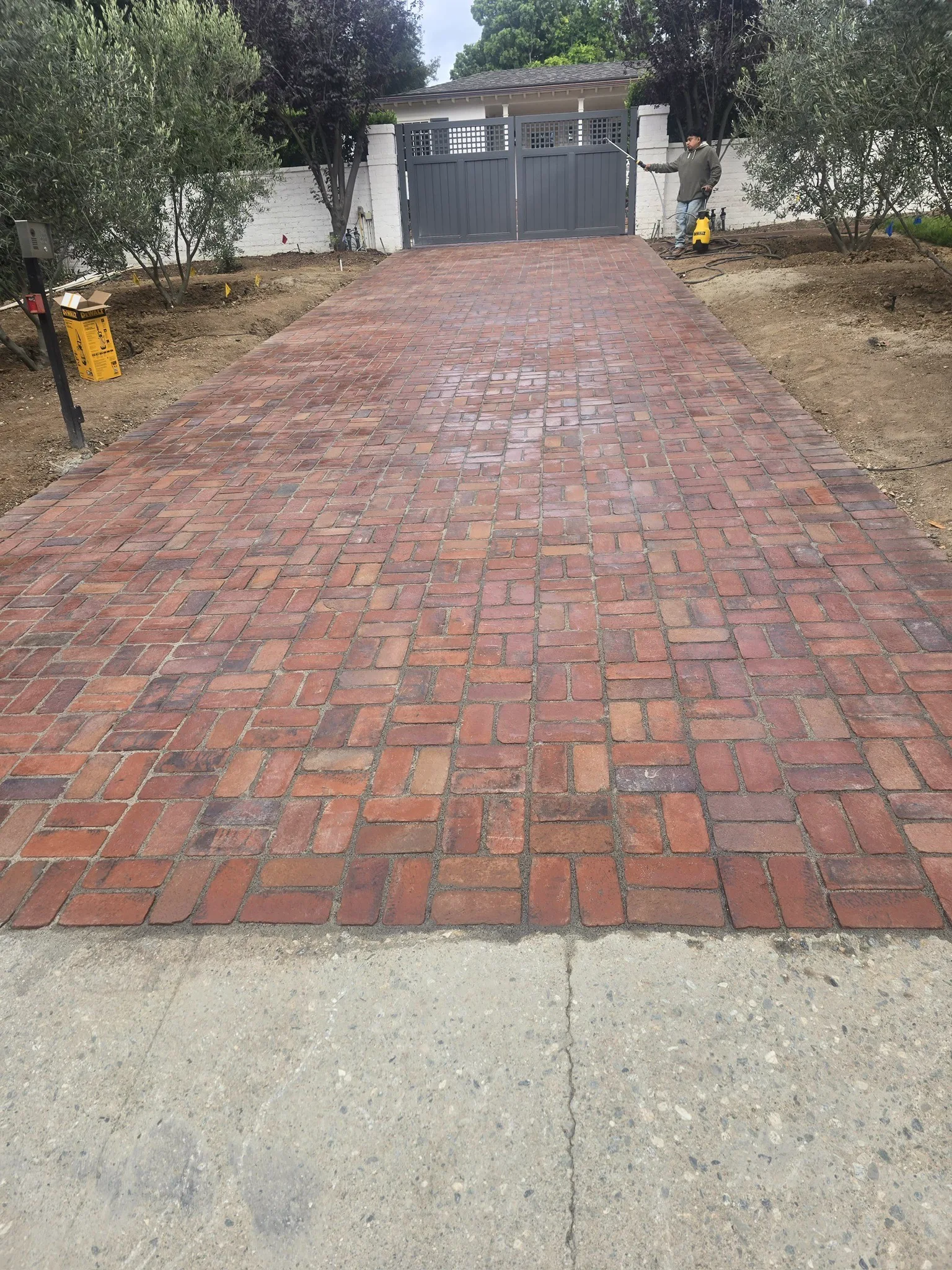
Brick walls, steps, walkways, planters and full brick driveways - plus brick veneer over existing walls. Classic material, clean coursing.
Learn More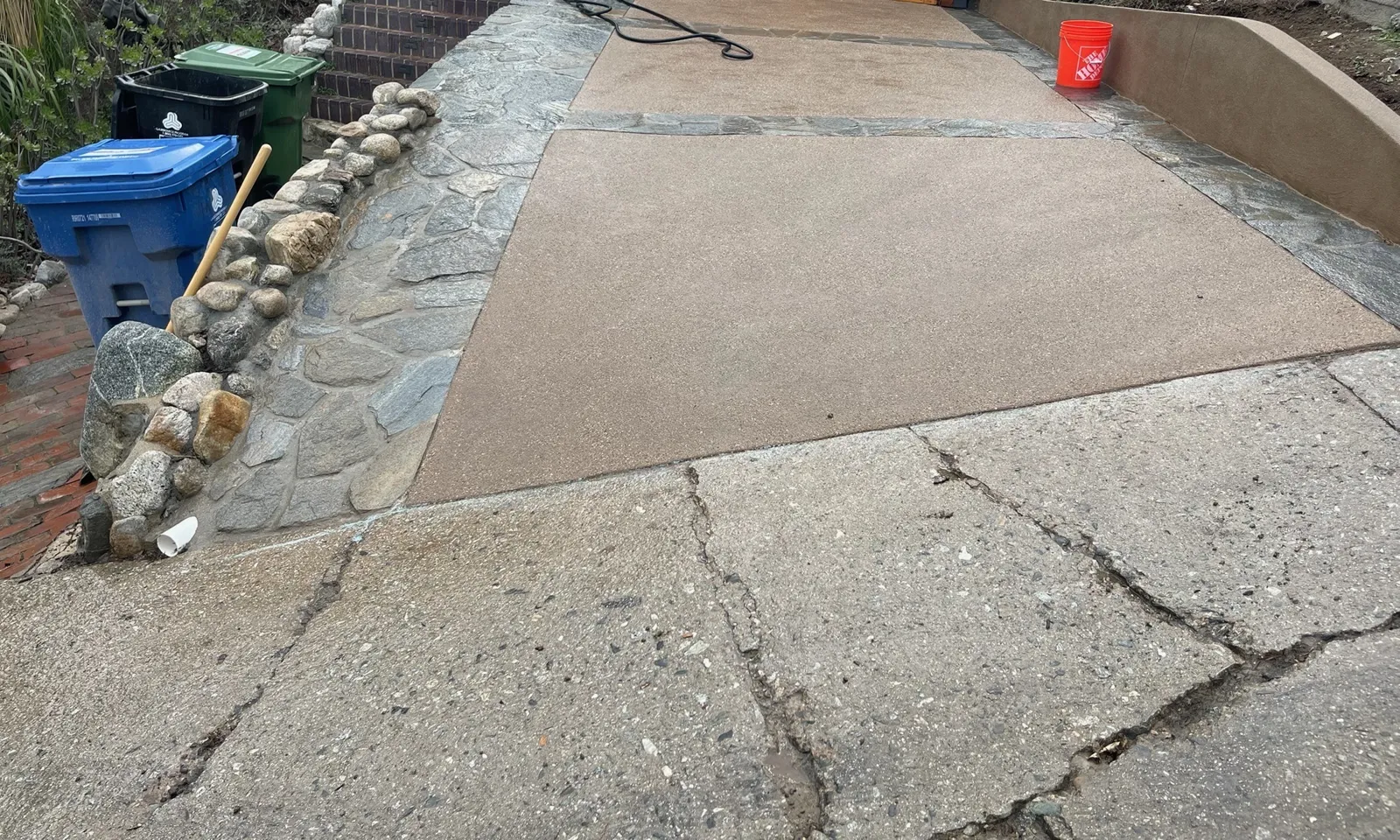
Concrete repair in Los Angeles starts with one question: is the crack cosmetic, or is the ground still moving? We repair existing driveways, patios, pool decks, entry slabs and the public sidewalk out front. Stable cracks get cleaned and sealed. Sections that lifted over a root, or sank and now hold water, get saw cut and repoured. Chipped step edges and corners get rebuilt. When the base under a slab has failed, the quote says so and prices the replacement instead.
Most concrete repair calls start with a driveway crack that keeps opening or a patio corner that dropped. Others start with a root that pushed up the slab by the front door. On site, we look at the crack first: are both edges level, and is it wider than a hairline? Then we check where water runs and whether any panel rocks underfoot. The free quote is written on site and lists which cracks get sealed and which sections get cut out.
Tell us about your project - we’ll get right back to you.
Every concrete slab cracks somewhere, even a well-built one. The National Ready Mixed Concrete Association (NRMCA) says no one can produce concrete that is completely free of cracks. Its guidance adds that most random cracks that appear early are unsightly but rarely affect structural integrity or service life. What matters for concrete repair is why a crack formed and whether it is still moving.
The same guidance blames most cracking on design and construction mistakes. Poor subgrade preparation and missing joints are two it names, and settlement cracks are one of the common forms. Los Angeles adds two pressures of its own. City plan check assumes expansive soil unless a soils report proves otherwise. That clay swells when wet and shrinks as it dries. Tree roots then lift slabs from below.
A stable crack gets patched. If both edges sit level and the crack stays near hairline width, we clean it out and seal it. Sealing keeps water and grit out of the crack and the base below. The repair still shows as a thin line on the surface. It is the simplest concrete repair, and it suits any crack that has stopped moving.
A lifted or sunken section gets cut out whole, back to the nearest control joints. The city's sidewalk spec does the same: a cut within 30 inches of a joint goes back to the joint. Roots and soft spots come out, and the base gets compacted before the pour. New control joints go no farther apart than 24 to 36 times the slab thickness.
Some slabs are past repair. When cracks run across most of a slab and panels rock under a car, the base has failed. Sealant cannot hold a slab that keeps moving. The fix is tear-out and a new pour on rebuilt base, which for a drive means a full driveway replacement. Your written quote names which of these cases you have.
Driveway cracks often start at a corner or over a root. A drive poured tight against the garage slab or sidewalk has no room to move. NRMCA guidance puts an isolation joint at those junctions, and our repoured sections follow it. A recent Google review mentions our driveway crack patching on a job that added a brick inlay walkway. Paver drives get paver repair and relaying instead.
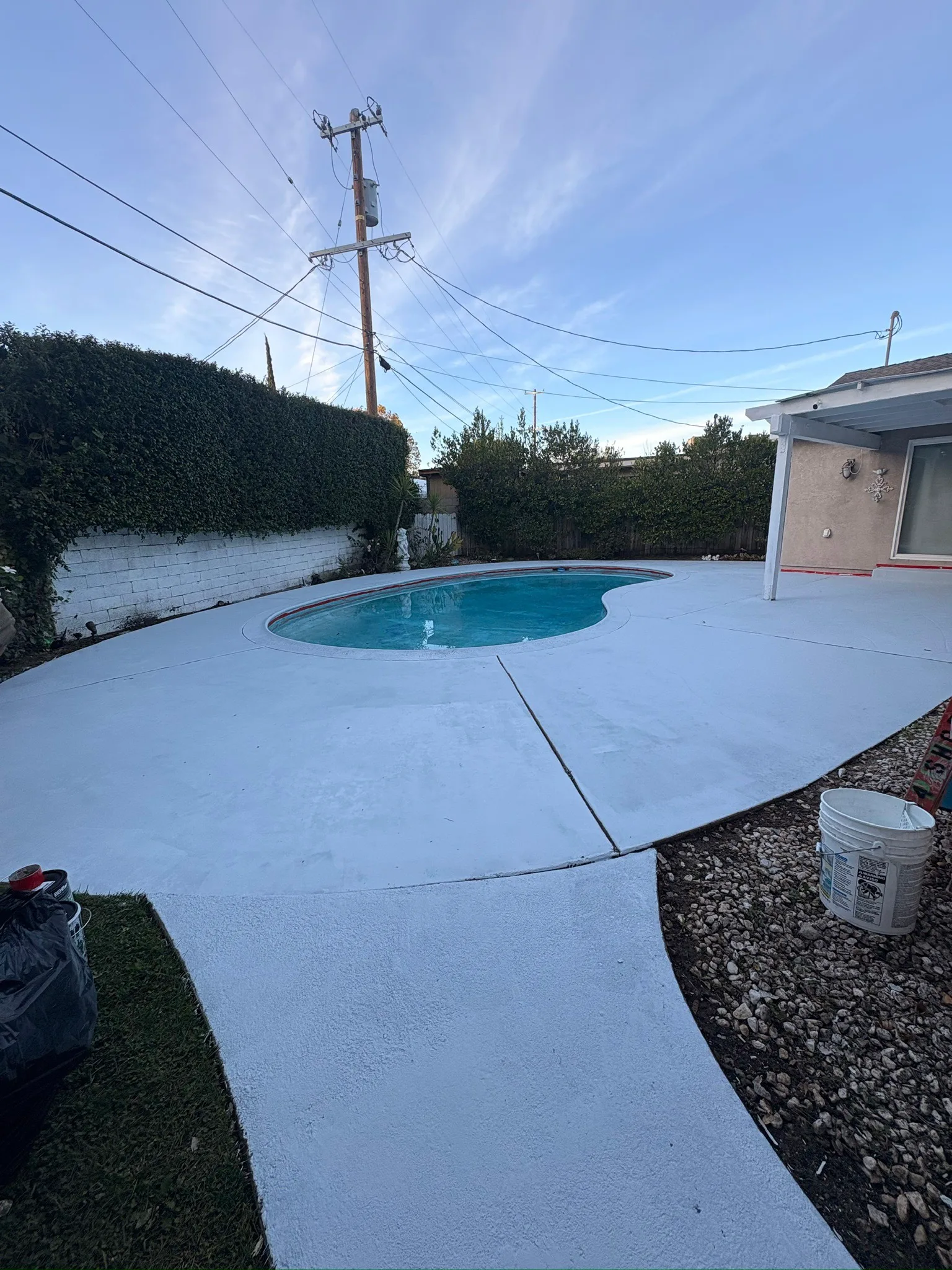
Patios fail where water sits. A sunken section that holds a puddle after rain has lost its slope. NRMCA guidance slopes the slab and its subgrade to drain. We cut that section out, fix the base and repour it with the right fall. Cracked pool deck panels come out at their joints and go back level. A patio past saving becomes a new patio from the base up.
Entry slabs take daily foot traffic, so a lifted edge by the door comes first. At one front entrance, our crew cut out a cracked slab and removed old tree roots. The ground was leveled and new concrete poured, all within two days. Broken step edges get formed and poured again. When a whole walk needs replacing, see front walk and step rebuilds.
On your own lot, usually not. In the City of Los Angeles, walks and driveways no more than 30 inches above grade need no building permit. The slab also cannot sit over a basement or a story below. Glendale, Burbank and Pasadena are separate cities with their own building departments. The parkway strip and sidewalk out front are public right of way.
Work there falls under the Bureau of Engineering and needs its A-Permit. It covers sidewalk repair and driveway repair. Fixing sidewalk damage from street tree roots is a common A-Permit job. For that repair the city waives the permit fee once it has photos of the damage. After the A-Permit, the Bureau of Street Services issues a Street Tree permit before street tree roots get trimmed.
The city sets no rule on who applies for an A-Permit. The permit is handled as part of the job, and we file the paperwork for you. Before work starts, the quote marks which panels are private and which sit in the right of way. The same rules apply to our work in Sherman Oaks and every other City of Los Angeles neighborhood.
Free, no-obligation estimates across Glendale, Burbank and Greater Los Angeles.
(424) 653-0453From the first look at the site to the final walk-through, here is exactly how it goes.
We look at the project where it lives: the grade, the access, what is being held back or built on, and what you want the finished space to look like.
You get a written quote with a real timeline. It spells out materials, finishes, demolition and haul-off, and flags permit or engineering questions before anything is built.
Proper base and footings, clean courses, real drainage behind every wall. The details you cannot see are the reason the work lasts, and we treat them that way.
We walk the finished work together - joints, finishes, cleanup, the whole job. Done means you have looked at every part of it and said so.
Common questions about concrete repair across Glendale, Burbank and Greater Los Angeles. Don't see yours? Give us a call - we're happy to help.
Brick walls, steps, walkways, planters and full brick driveways - plus brick veneer over existing walls. Classic material, clean coursing.
Learn More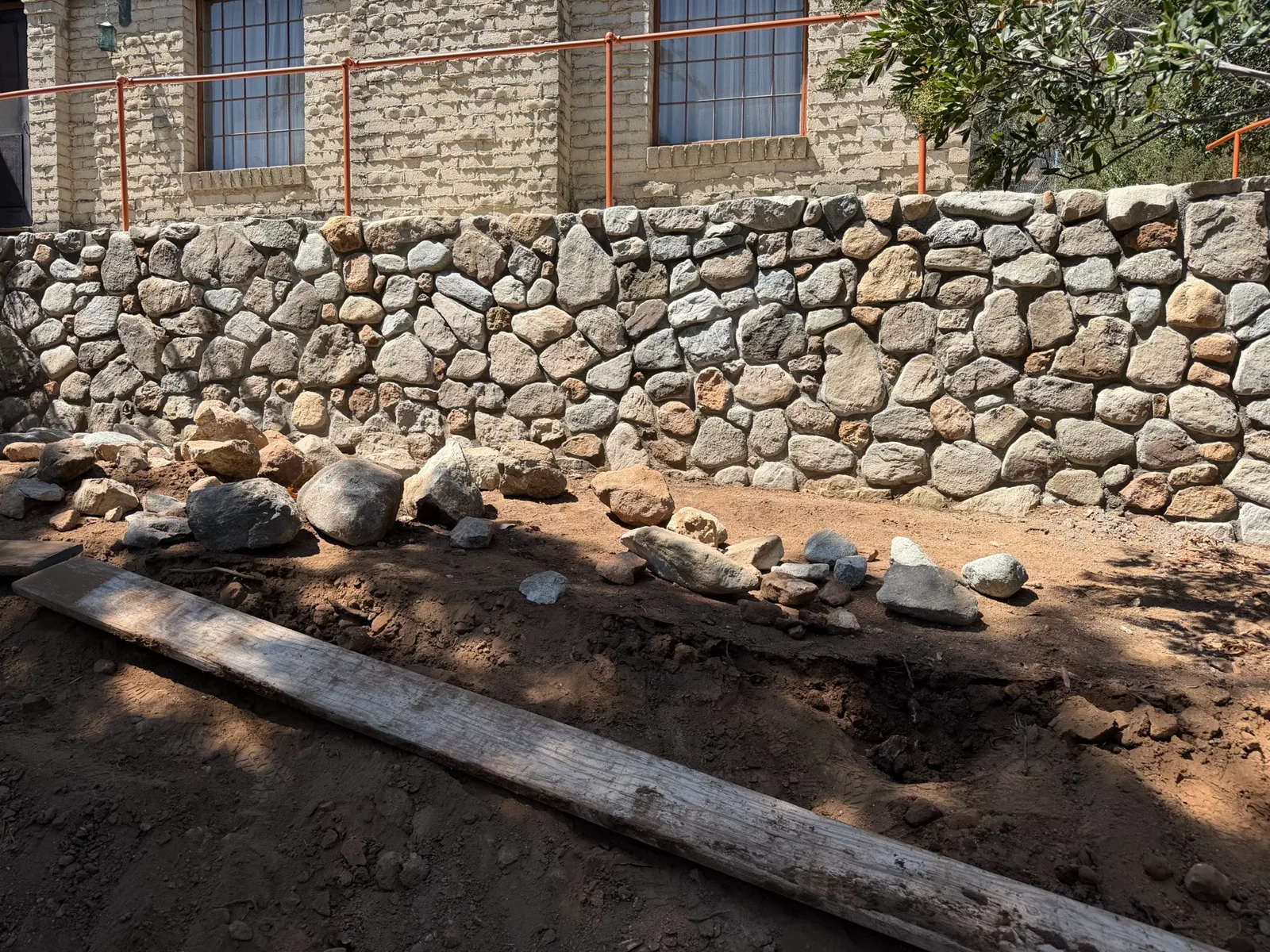
Natural stone walls, river rock work, flagstone patios and paths, and stone veneer on walls, columns and outdoor kitchens.
Learn More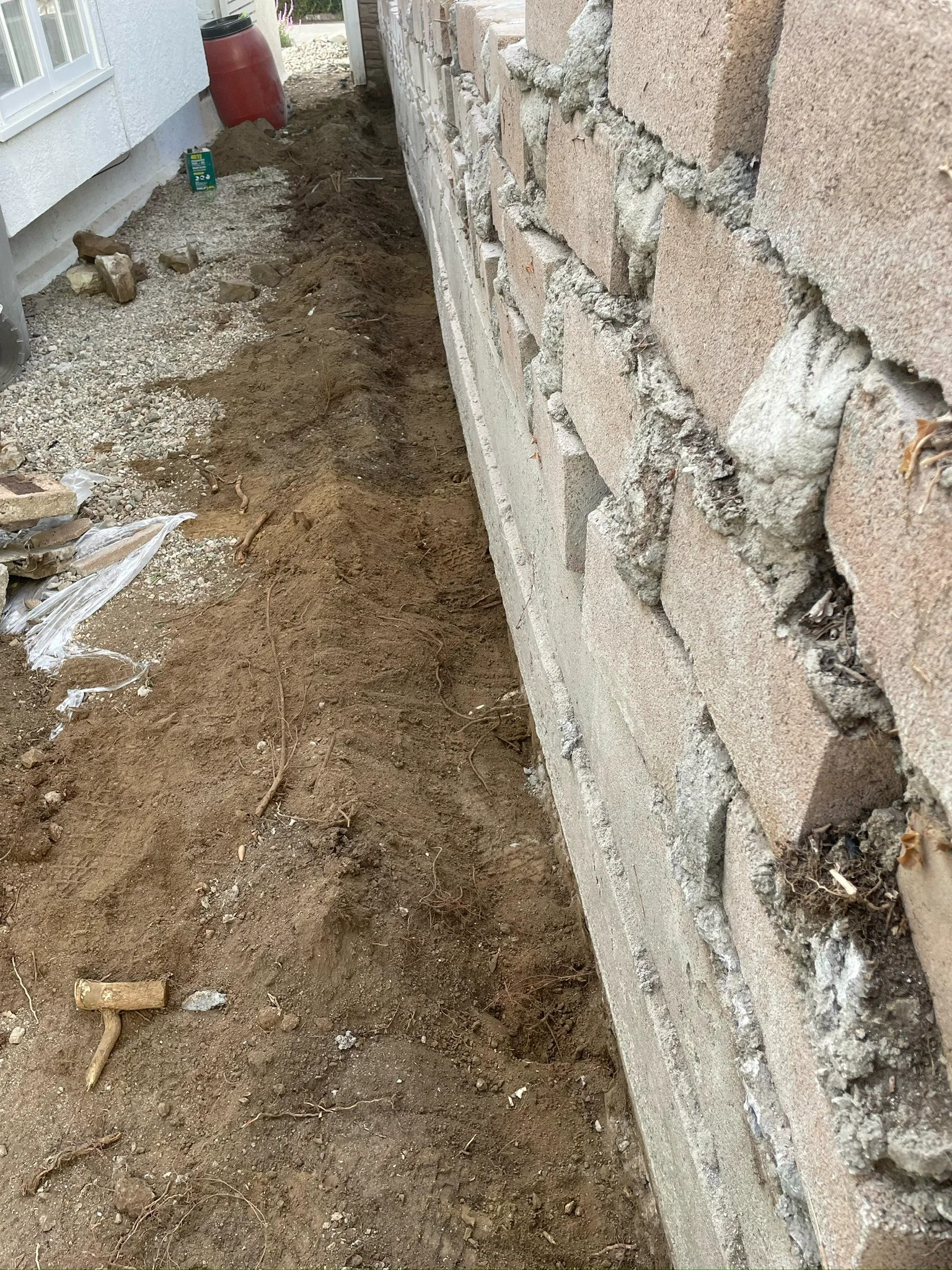
Engineered block and concrete retaining walls with real drainage - stucco, stone or brick finished - plus failing walls rebuilt right.
Learn More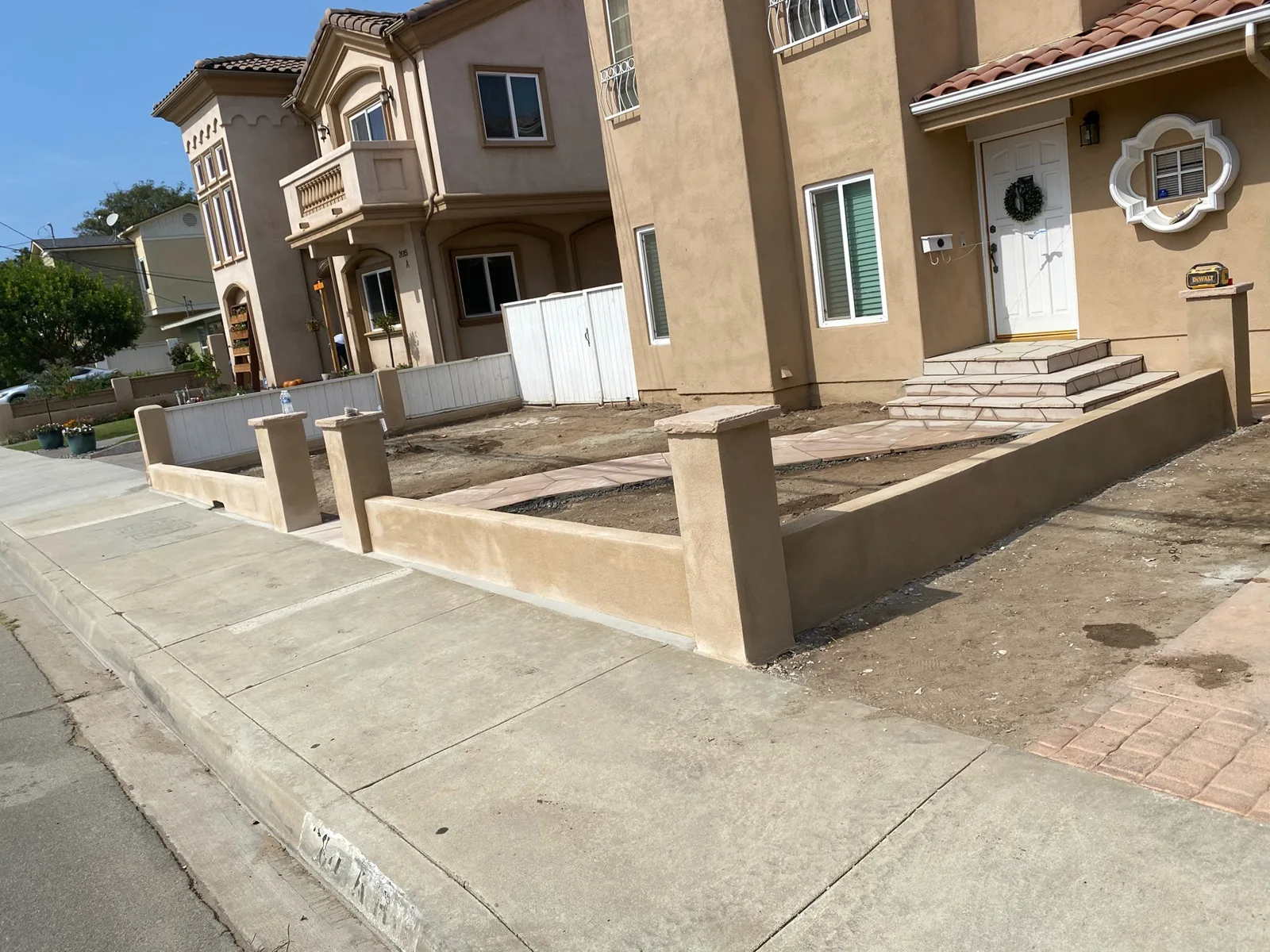
Property line walls, privacy walls, courtyard walls and gated front-yard enclosures - reinforced block, finished in stucco, stone or left clean.
Learn More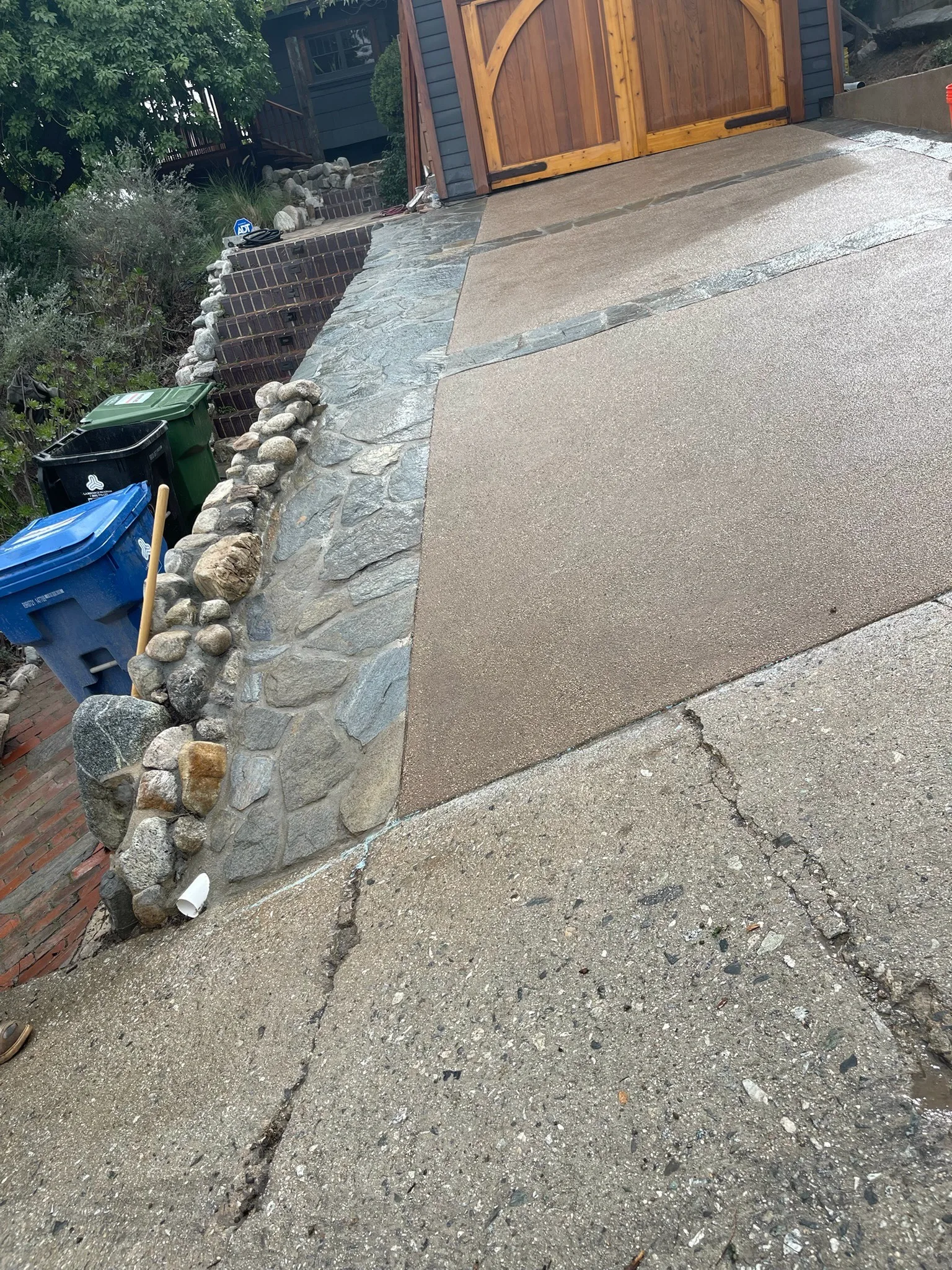
Driveways, patios, pool decks, steps, walkways and slabs - formed and poured on compacted base, finished the way you pick.
Learn More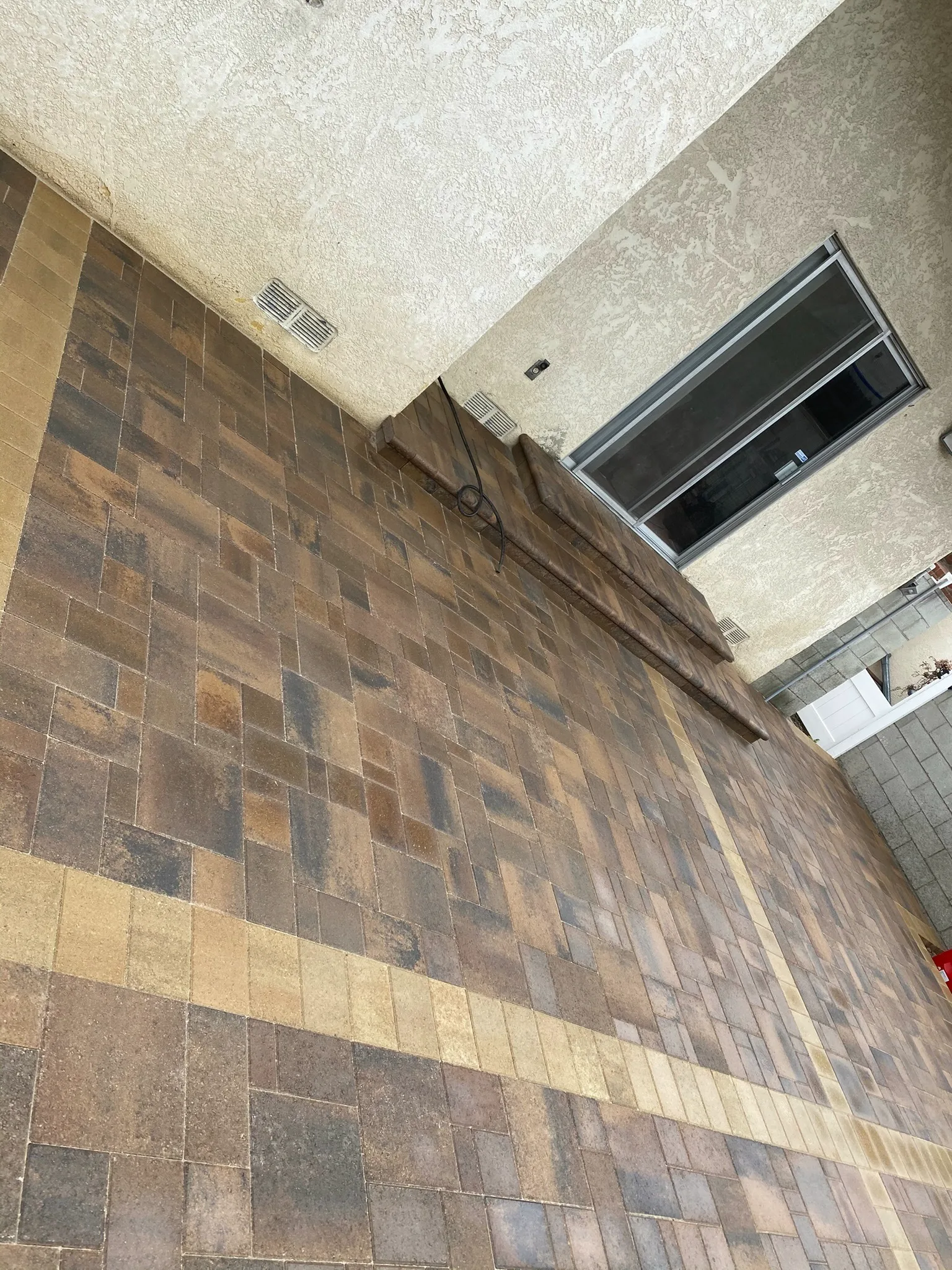
Interlocking paver driveways, patios, walkways and pool decks - real base prep, tight patterns, edges that hold.
Learn MoreRecent 5-star reviews from Yelp and HomeAdvisor
This was a great company to work with. Francisco communicates in detail verbally and in writing. He also does excellent work and has a great staff. He also left my place clean daily before they left. They show up on time and get the job done as projected.
Francisco and his crew are great! They repaired a brick wall for me when other companies said it had to be demolished and couldn't be repaired. They were prompt and friendly and did a great job. I would highly recommend them!
We are extremely pleased with the outstanding work completed by Camberos Masonry. The best word to describe their work is immaculate! … The crew worked tirelessly, paid attention to every detail, and left the job site clean and organized each day.
Brick, block, stone and concrete are our whole trade - not a sideline. Footings, coursing, drainage and finish details done the traditional way, because that is why masonry lasts.
Hillside walls with real drainage, slabs built for expansive soil, finishes that suit Spanish, Craftsman and modern houses. This is Los Angeles work by people who know Los Angeles lots.
We look at the site, flag permits and engineering honestly, and put the price and timeline in writing. No phone guesses, no surprise change orders for things we should have seen.
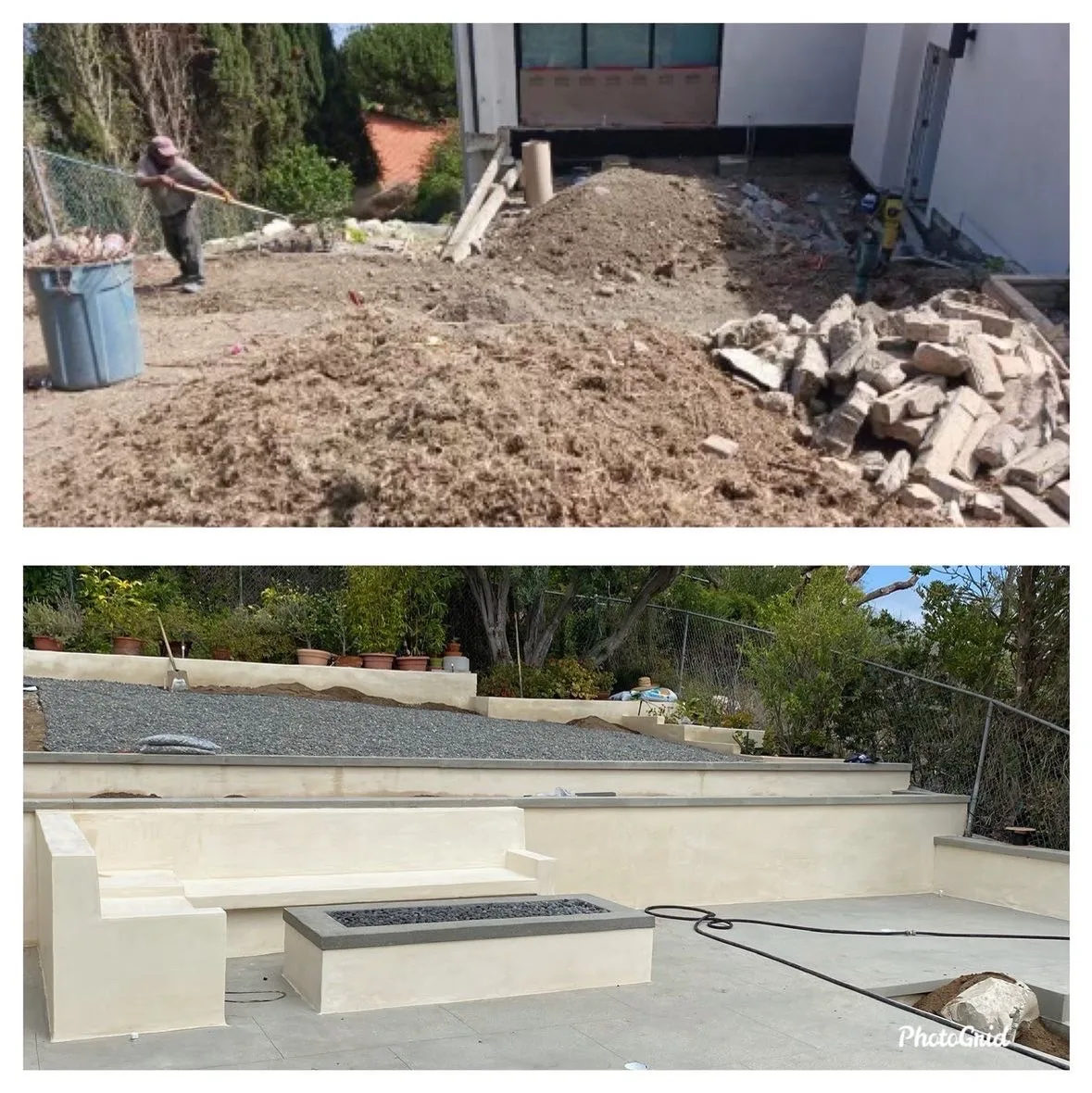
Walls, flatwork, veneer, fire features and tile from one contractor - so materials match, schedules hold, and the finished yard reads as one design instead of four handoffs.
A wall that worries you, a driveway past its best, or a backyard ready to become the good part of the house? Call or send the form and we will look at the site with you and hand you a straight written quote.
Tell us about your project - we’ll get right back to you.